
 2026-05-12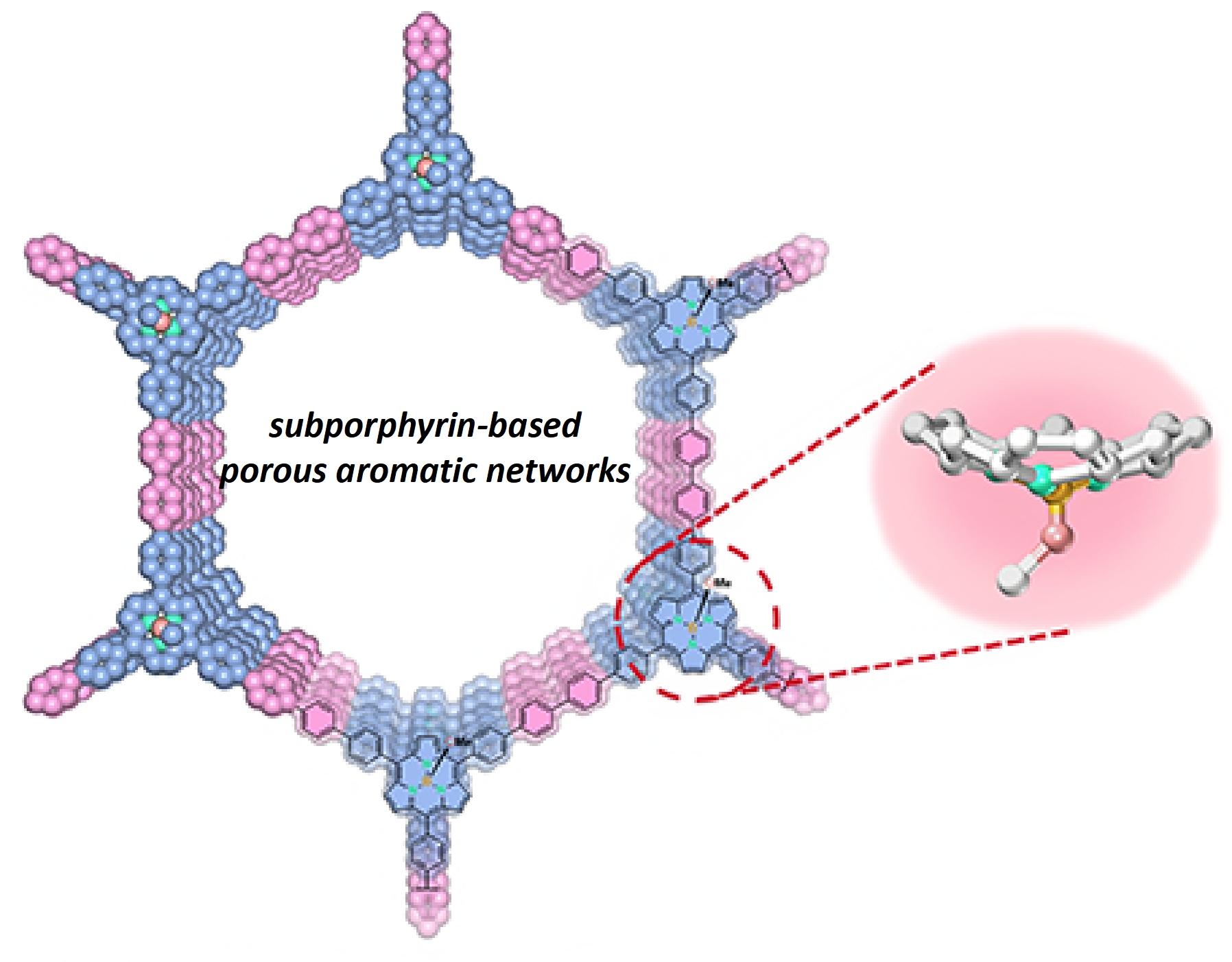
Recently, the Green Chemistry Research Team of the School of Chemistry and Chemical Engineering at our university, led by Professor Wang Jianji in collaboration with Professor Jong-Beom Baek of the Ulsan National Institute of Science and Technology (UNIST) in South Korea, have published a research paper entitled “Subporphyrin Frameworks: A Missing Link Between Porphyrinoids and Porous Aromatic Networks” in the top-tier international chemistry journal Angewandte Chemie International Edition. Ph.D. candidate Zhao Liufang of our university served as the first author of the paper, while Professor Zhao Yuling and Associate Professor Qiu Jikuan of the School of Chemistry and Chemical Engineering, together with Professor Baek and Professor Wang Jianji, served as co-corresponding authors. Henan Normal University is the first author’s affiliation.
Subporphyrins represent a distinctive class of bowl-shaped, π-conjugated, and intrinsically electron-deficient macrocycles that exhibit photophysical and coordination behaviors unlike those of planar porphyrins. In this study, the first subporphyrin-based porous aromatic networks were synthesized by coupling meso-functionalized subporphyrins with rigid aromatic linkers under solvothermal conditions. These frameworks exhibit extended π-delocalization and strong red-shifted absorption covering the UV–vis–NIR region, enabling efficient full-spectrum light harvesting. The research found that the optimized catalyst exhibited high photogenerated charge separation and transport capabilities, as well as outstanding catalytic efficiency for a series of advanced oxidation reactions, with performance two to three times that of its porphyrin-based PAF analogues, demonstrating promising application prospects in fields such as environmental pollutant degradation and green oxidative conversion.
This achievement represents an important advance made by our university in the field of subporphyrin photocatalysis research. It is the first time that subporphyrin units have been constructed and functionally applied in porous photocatalytic systems, providing new insights for the design of efficient and stable full-spectrum-responsive metal-free photocatalysts, as well as an important scientific basis for the development of novel photocatalytic materials oriented toward green chemistry and the construction of clean oxidation processes. This research was supported by the Excellent Youth Science Foundation of Henan Province and the Key Program of the Natural Science Foundation of Henan Province, among other projects.
Paper link:http://doi.org/10.1002/anie.2270272
(Li Bin, Wang Manman, School of Chemistry and Chemical Engineering)