
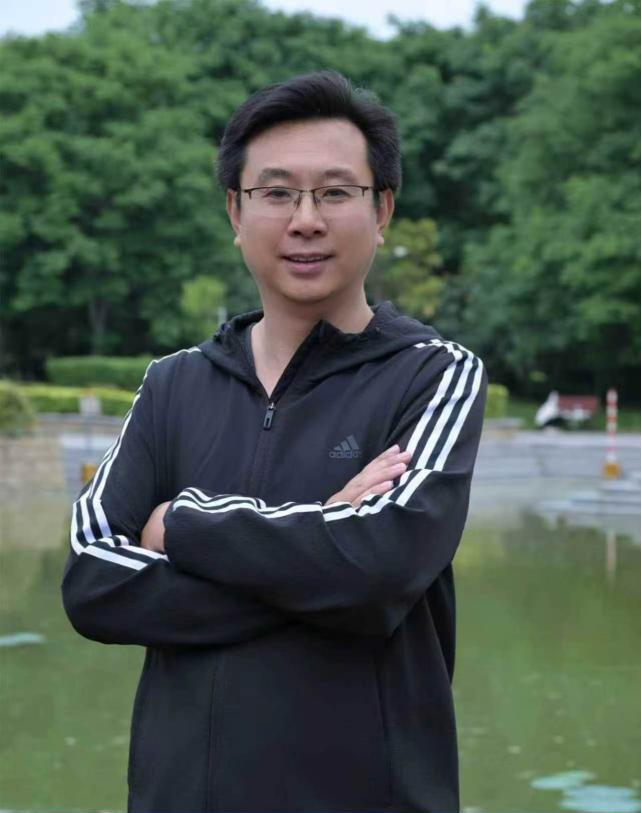
王伟,男,1975年7月生,中共党员,副教授,博士,硕士生导师,医学信息工程系主任,韩国汉阳大学访问学者,中国计算机学会会员、中国人工智能学会会员、中国生物工程学会会员。
2011年-2014年在武汉大学计算机学院进行博士研究生学习。曾获得河南省科技成果一等奖1项,河南省自然科学优秀学术论文二等奖,河南省教育厅优秀论文奖一等奖2项、二等奖2项,河南师范大学研究生优秀指导教师,河南师范大学文明教师等奖项。获得国家发明专利7项,软件著作权9项。主持并参与国家自然基金、教育部协同育人创新项目、河南省自然科学基金项目、河南省科技攻关项目、河南省高校重点项目等。近几年来,担任了 Bioinformatics、Brief in Bioinformatics、BIBM、IEEE-ACM Transactions on Computational Biology and Bioinformatics、IEEE Transactions on Neural Networks and Learning Systems、IEEE Journal of Biomedical and Health Informatics等期刊会议审稿人,在生物信息领域主流的 SCI 期刊发表相关论文二十余篇,主要研究成果发表在Pattern Recognition(1区顶刊),Engineering Applications of Artiϧcial Intelligence(1区顶刊),Briefings in Bioinformatics (2区顶刊),IEEE-ACM Transactions on Computational Biology and Bioinformatics (CCF B类),Applied Soft Computing (2区顶刊),International Journal of Biological Macromolecules (2区顶刊)等期刊,得到了国内外同行专家的认可,发表在 Proteins 期刊的文章被选为期刊封面文章。近年来,指导研究生共计30余人,其中张禹同学获得了2022年河南省优秀硕士学位论文,毕业研究生就业方向为攻读博士研究生,高等院校,优质IT企业等。
电子邮件:weiwang@htu.edu.cn
研究方向:人工智能、深度学习、生物信息等
硕士招生方向:计算机科学与技术、计算机技术、人工智能、软件工程
科技成果奖励:
[1]Surface shapes and surrounding environment analysis of single- and double-stranded DNA-binding proteins in protein-DNA interfac 河南省第四届自然科学学术奖-河南省自然科学优秀学术论文二等奖,2018
[2]SmoPSI: Analysis and Prediction of Small Molecule Binding Sites Based on Protein Sequence Information,2021年度河南省教育厅科技成果奖优秀科技论文二等奖
[3]Surface shapes and surrounding environment analysis of single- and double-stranded DNA-binding proteins,2019年度河南省教育厅科技成果奖优秀科技论文一等奖
[4]DLS: A Link Prediction Method Based on Network Local Structure for Predicting Drug-Protein Interactions,2023 年度河南省教育厅科技成果奖优秀科技论文一等奖
[5]Analysis and prediction ofsingle-stranded and double-stranded DNA binding proteins based on protein sequences,2020年度河南省教育厅科技成果奖优秀科技论文一等奖
教育教学奖励:
[1]2023年河南省优秀硕士学位论文指导教师
[2]2023年河南师范大学研究生优秀指导教师
[3]2023年河南师范大学“三育人”先进个人
[4]2021年河南师范大学“文明教师”
[5]2019年河南师范大学研究生优秀指导教师
[6]2018年河南师范大学“优秀教师”
科研项目:
[1]多组学深度迁移学习的致癌蛋白药物发现研究,河南省面上科学基金项目,主持,在研
[2]基于深度学习的超图信息融合策略预测抗癌药物协同方法研究,河南省科技攻关项目,主持,已结项
[3]核酸结合蛋白与药物相互作用靶标预测研究,新乡市科技攻关计划,主持,已结项
[4]DNA结合蛋白表面三维结构建模及分类研究,河南省面上科学基金项目,主持,已结项
[5]基于深度学习的核酸结合蛋白与药物分析预测研究,河南省高等学校重点科研项目,主持,已结项
[6]蛋白-DNA相互作用的表面结构建模及靶向药物研究,河南省自然科学基金面上科学基金项目,主持,已结项
[7]基于机器学习的蛋白-DNA结合机制研究,河南省高等学校重点科研项目,主持,已结项
[8]面向低质数据的粒计算与特征选择研究,国家自然科学基金面上项目,参与,已结项
[9]知识不确定性度量的粒计算模型及其应用研究,国家自然科学基金面上项目, 参与,已结项
[10]基于结构的DNA结合蛋白结合残基预测及结合特异性分析,国家自然科学基金面上项目,参与,已结项
教改项目:
[1]河南省研究生教育改革与质量提升工程项目(案例项目),主持,已结项
[2]河南省精品在线课程《数据结构》,主持,已结项
[3]面向应用的Python教学体系实践与探索,教育部协同育人创新项目,主持,已结项
[4]河南省成人在线开放课程,参与,已结项
部分科研论文:
[1]Wei Wang, Gaolin Yuan, et al. MCMTSYN: Predicting anticancer drug synergy via cross-modal feature fusion and multi-task learning[J]. Pattern Recognition, 2026,76[8]: 113222.
[2]Wei Wang, Yuchen Zhu, et al.Multi-view feature learning and enhanced hypergraph neural networks forsynergistic prediction of drug combination. Engineering Applications of Artificial Intelligence, 2026, 167: 11386.
[3]Wang Wei, Xing Chengyu, Sun Zhenxi, et al. MARSNet: A Convolutional Attention Residual Shrinkage Network for RNA-Protein Binding Site Prediction[J]. Neural Networks, 2026: 108922.
[4]Wei Wang, Linchong Ma, et al.AdptDilatedGCN: Protein-ligand binding affinity prediction based on multi-scale interaction fusion mechanism and dilated GCN. International Journal of Biological Macromolecules, 2025, 311: 143751.
[5]Wei Wang, Yuchen Zhu, et al.DeepKGI: Cross-layer graph fusion and interpretable key gene identification for cancer drug response prediction. Applied Soft Computing, 2026, 187[2]: 114344.
[6]WeiWang,Gaolin Yuan, et al. A granularity-level information fusion strategy on hypergraph transformer for predicting synergistic effects of anticancer drugs, Briefings in Bioinformatics, 2024, 25[1]:bbad522
[7]WeiWang,Shitong Wan, et al.ResaPred: A Deep Residual Network with Self-Attention to PredictProtein Flexibility, IEEE/ACMTransactions on Computational Biology and Bioinformatics, 2025, 22[1]: 216-227
[8]Wei Wang,Mengxue Yu, et al. SMGCN: multiple similarity and multiple kernel fusion based graph convolutional neuralnetwork for drug-target interactions prediction, IEEE/ACM Transactions on Computational Biologyand Bioinformatics, 2024, 21[1]: 143-154
[9]Wei Wang,Zhenxi Sun, et al. MAHyNet: parallel hybrid network for RNA-protein binding sites prediction based on multi-headattention and expectation pooling, IEEE/ACM Transactions on Computational Biology and Bioinformatics, 2024, 21[3]: 416-427
[10]Wang Wei, Sun Bin, et al. GraphPLBR: Protein-ligand binding residue prediction with deep graph convolution network[J]. IEEE/ACM Transactions on Computational Biology and Bioinformatics, 2023.
[11]Wang Wei, Wang Yongqing, et al.LPLSG: Prediction Of LncRNA-protein Interaction Based On Local Network Structure[J]. Current Bioinformatics, 2023[8]: 1-9.
[12]Wang Wei, Liang Shihao, et al. GCHN-DTI: Predicting drug-target interactions by graph convolution on heterogeneous networks[J]. Methods, 2022, 206: 101-107.
[13]Wang Wei,Zhang Yu,et al, PseAraUbi: predicting arabidopsis ubiquitination sites by incorporating the physico-chemical and structural features[J]. Plant molecular biology, 2022.110,81-92.
[14]Wang Wei,Zhang Yu, et al,Prediction of DNA-Binding Protein–Drug-Binding Sites Using Residue Interaction Networks and Sequence Feature[J].Frontiers in Bioengineering and Biotechnology, 2022.10,822392
[15]Wang Wei,ShuXili,Sun Bin, etal,Predicting DNA-binding protein and coronavirus protein flexibility using protein dihedralangle and sequence feature[J].Proteins-structure function and bioinformatics.2022.11:1-11.
[16]Wang Wei,Jiao Xiaolin,etal.DeepGenBind: a novel deep learning model for predicting transcription factor binding sitesn[C].IEEE International Conference on Bioinformatics and Biomedicine [BIBM]2022,3629-3635.
[17]Wang Wei, WangYongqing,et al. PPDTS: Predicting potential drug–target interactions based on network similarity[J]. IET Systems Biology,2021,11:1-10 .
[18]Wang Wei, Sun Bin, et al. DPLA: prediction of protein-ligand binding affinity by integrating multi-level information[C]. BIBM, 2021.
[19]Wang Wei, Lv Hehe,et al. Predicting DNA binding protein-drug interactions based on network similarity[J]. BMC Bioinformatics. 2020; 21: 322.
[20]Wang Wei, Lv Hehe, et al. DLS: A Link Prediction Method Based on Network Local Structure for Predicting Drug-Protein Interactions[J]. Front Bioeng Biotechnol. 2020; 8: 330.
[21]Wang Wei, Li Keliang,et al.SmoPSI: Analysis and Prediction of Small Molecule Binding Sites Based on Protein Sequence Information[J]. Comput Math Methods Med. 2019; 2019: 1926156.
[22]Wang Wei, Zhao Yuan , et al. InPrNa: A Tool for Insight Into Protein–Nucleic Acids Interaction Information[J]. IEEE Access, 2019, 7:140375-140382.
[23]Wang Wei, Li Keliang, et al. Analyzing the Surface Structure of the Binding Domain on DNA and RNA Binding Proteins[J]. IEEE Access, 2019:1-1.
[24]Wang Wei, Sun Lin, Zhang Shiguang,et al. Analysis and prediction of single-stranded and double-stranded DNA binding proteins based on protein sequences[J]. BMCBioinformatics, 2017, 18[1]:300.
[25]Wang Wei, Liu Juan, and Sun Lin, Surface shapes and surrounding environment analysis of single‐and double‐stranded DNA‐binding proteins in protein‐DNA interface[J]. Proteins Structure Function & Bioinformatics, 2016, 84[7]:979-989.
[26]Wang Wei,Liu Juan,Zhou Xionghui,Identification of single-stranded and double-stranded DNA binding proteins based on protein structure. BMC Bioinformatics, 2014,15 Suppl 12:S4-S4
[27]Wang Wei, Liu Juan,Xiong Yi,Zhu Lida,Zhou Xionghui,Analysis andclassification of DNA-binding sites in single-stranded and double-stranded DNA-binding proteins using protein information.,IET Systems Biology,2014,8(4):176-183
[28]王伟,刘娟,孟志斌.基于时序遥感卫星云图的对流云团动态追踪预测[J].电子学报,2014,42[4]:804-808.
[29]王伟,刘娟,孟志斌等.卫星云图的多通道FCM分割算法[J].计算机工程与科学,2012,34[10]:83-87.